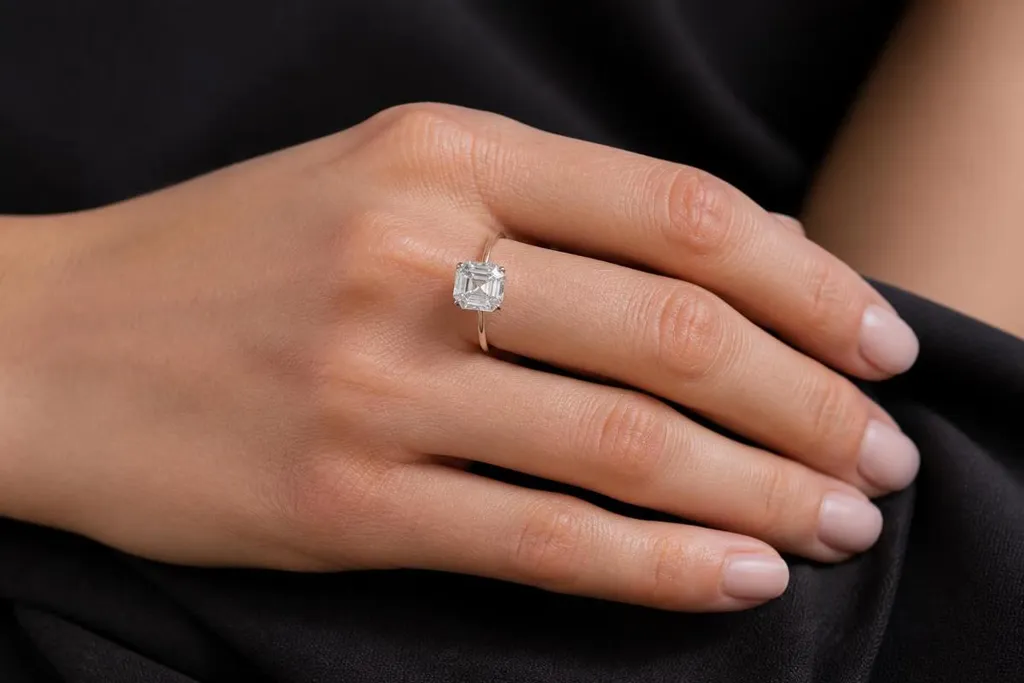
Some diamond cuts are designed to scatter light in every direction. The Asscher cut takes a more disciplined approach. Its square outline, cropped corners and concentric step facets create a distinctive geometric pattern, drawing the eye into the stone rather than relying on rapid flashes of brilliance. That structured beauty explains why it remains so closely associated with the sophistication of Art Deco jewellery.
Exploring beautiful lab diamond asscher cut rings reveals how naturally the shape works with contemporary lab-grown diamonds. Although the aesthetic has historical roots, an Asscher-cut engagement ring need not feel like a reproduction. Clean settings, carefully considered proportions and modern craftsmanship can give its characteristic geometry a distinctly current expression.
What Gives the Asscher Cut Its Art Deco Character?
The Asscher cut predates the height of the Art Deco period, but its geometry fits remarkably well with the design language that became prominent during the 1920s and 1930s. Symmetry, repeated lines and architectural forms are central to both.
Viewed from above, an Asscher diamond is essentially square with clipped corners. Beneath the surface, step-cut facets form a series of concentric shapes that can create a compelling hall-of-mirrors effect.
This is very different from the appearance of a round or radiant brilliant. Instead of numerous small flashes, an Asscher tends to produce broader reflections and clearly defined patterns of light and shadow.
For someone attracted to vintage influence but wary of excessive ornament, this can be particularly appealing. The diamond itself provides the period character, meaning the surrounding ring can remain relatively restrained.
Clarity and Symmetry Deserve Careful Attention
The open nature of step-cut faceting makes an Asscher diamond particularly revealing. Its large facets provide fewer opportunities to disguise internal characteristics, so clarity deserves thoughtful consideration.
That does not necessarily mean selecting the highest clarity grade available. A more practical objective is finding a lab-grown diamond that appears clean to the unaided eye and whose inclusions do not interrupt the ordered pattern of the facets.
Symmetry is equally important. The Asscher's appeal depends on precision: corners should feel balanced, the outline should appear square, and the concentric facet pattern should draw the eye naturally towards the centre.
These qualities are worth assessing visually rather than relying entirely on a grading report. Two diamonds with similar specifications can still differ in personality because their proportions influence how those geometric reflections appear.
Carat Weight Looks Different in an Asscher
Carat weight alone provides an incomplete picture of an Asscher-cut diamond's visual size. Step cuts can carry a meaningful proportion of their weight in depth, so comparing face-up measurements is particularly useful.
A 2-carat Asscher may appeal to someone who wants enough scale for its internal geometry to become a strong visual feature. The larger surface can make the stepped pattern easier to appreciate and may balance well with broader fingers or an architectural setting.
Another wearer might prefer a smaller stone because the compact square shape creates the understated Art Deco character they want. A finely proportioned Asscher on a slender band can feel exceptionally refined without requiring dramatic carat weight.
The decision should therefore be based on how the diamond occupies the finger and interacts with its setting, rather than the number on its certificate alone.
Let the Setting Support the Geometry
An Asscher-cut lab diamond works particularly well in settings that respect its clean outline. A solitaire creates a minimalist interpretation, allowing the cropped corners and step facets to provide all the necessary detail.
Diamond-set shoulders can introduce contrasting sparkle while maintaining the centre stone as the focal point. For a stronger vintage influence, geometric halos and carefully placed accent diamonds can reinforce the Art Deco aesthetic.
Metal also changes the mood. Platinum and white gold emphasise crisp lines and create a cool, period-inspired appearance. Yellow gold provides warmer contrast and can make the diamond's outline particularly distinct.
Practical construction matters as well. The cropped corners need secure support, while setting height should suit the wearer's everyday routine and plans for a future wedding band.
Final Thought
Asscher-cut lab diamond rings endure because their beauty is based on structure rather than fashion. The combination of square proportions, clipped corners and precise step facets creates an aesthetic with unmistakable historical character, yet one that translates remarkably well into modern jewellery.
Choosing successfully means prioritising symmetry, clarity, dimensions and setting balance. When those elements align, the Asscher cut offers something genuinely distinctive: an engagement ring that feels architectural, elegant and quietly connected to the enduring appeal of Art Deco design.