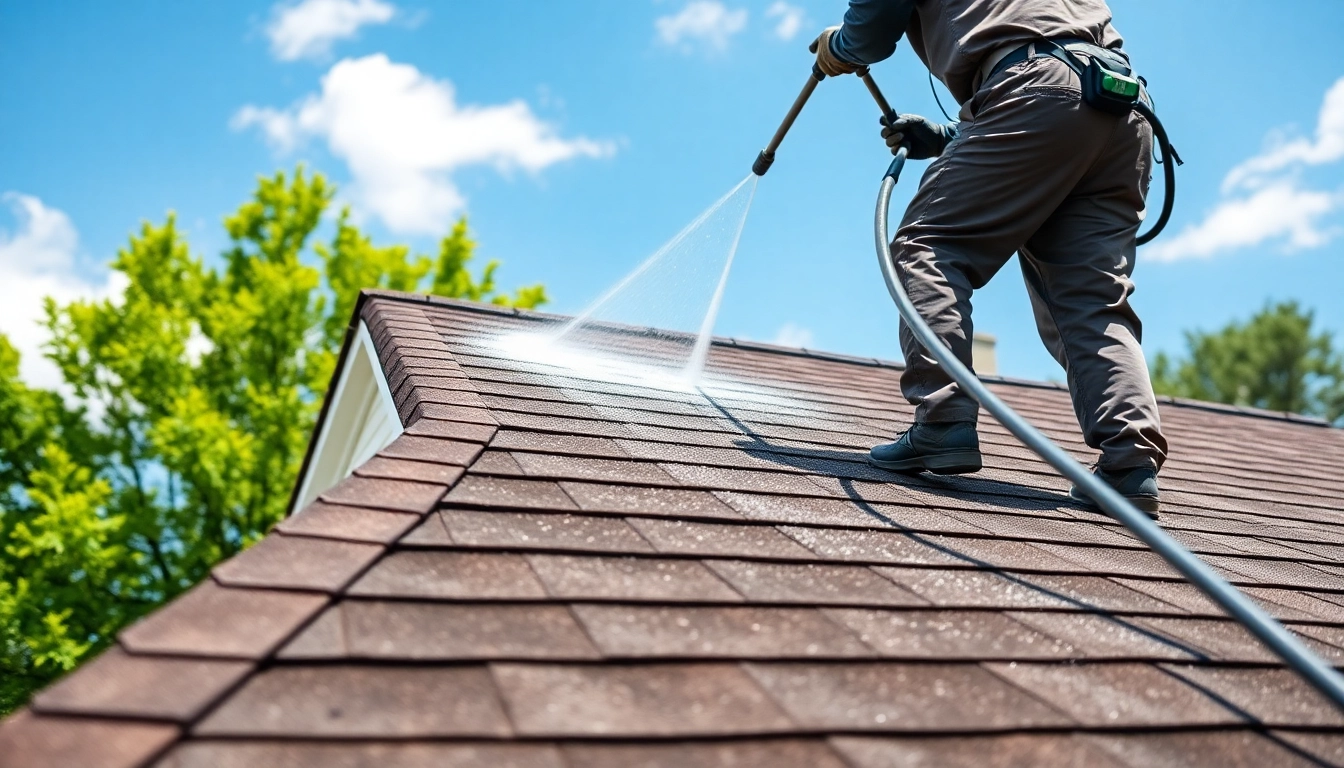
Understanding Roof Cleaning
What is Roof Cleaning?
Roof cleaning is the process of removing debris, moss, algae, and other environmental contaminants that accumulate on rooftops. This practice not only enhances the aesthetic appeal of a home but also extends the lifespan of the roof by preventing potential damage. Regular maintenance, including Roof Cleaning, is essential for ensuring that your roof remains in optimal condition.
Importance of Regular Roof Cleaning
Regular roof cleaning is vital for several reasons. Firstly, it helps in maintaining the structural integrity of your roof. Over time, organic materials can promote the growth of mold and algae, which can lead to degradation and leakages. Secondly, a clean roof can significantly enhance energy efficiency; darkened roofs absorb more heat, leading to increased cooling costs in warmer months. Lastly, a well-maintained roof contributes positively to the overall aesthetic value of your home, which can be beneficial if you plan to sell your property.
Common Roof Cleaning Techniques
There are several techniques commonly used for roof cleaning, each with its benefits and limitations:
- Pressure Washing: This method uses high-pressure water jets to remove dirt and debris but can potentially harm roofing materials if not done correctly.
- Soft Washing: This low-pressure technique utilizes a mixture of water and specialized cleaning solutions to effectively eliminate organic growth without damaging the roof.
- Chemical Cleaning: It employs a variety of cleaning agents to treat issues such as moss or algae growth, requiring careful handling to avoid harming surrounding vegetation.
Choosing the Right Method for Roof Cleaning
Soft Washing vs. Pressure Washing
When it comes to roof cleaning, two primary methods often come into play: soft washing and pressure washing. Soft washing is generally recommended for most roofing materials, especially shingles, as it effectively removes dirt and organic growth while minimizing the risk of damage. Pressure washing, although faster, can strip away protective layers from shingles, leading to potential leaks down the line.
Best Practices for Eco-Friendly Roof Cleaning
For environmentally-conscious homeowners, eco-friendly roof cleaning methods are available. Selecting biodegradable cleaning solutions minimizes environmental harm. Additionally, ensuring proper runoff management during the cleaning process helps protect local water sources. Professional roof cleaners often implement these practices, contributing to sustainable gardening and landscaping.
When to Call in Professionals for Roof Cleaning
While some homeowners may consider DIY cleaning, professional services are advisable under specific circumstances. If the roof is steep or high, or if you are uncertain about the cleaning method, hiring a professional can ensure safety and satisfactory results. Furthermore, professionals have the expertise to identify underlying issues that might not be visible to the untrained eye.
Cost Factors in Roof Cleaning
Average Roof Cleaning Prices Explained
The cost of roof cleaning can vary significantly based on several factors, including the size of the roof and the cleaning method used. On average, homeowners can expect to pay between $300 and $600 for professional roof cleaning services. However, larger or more complex roofs may incur higher costs.
Factors Affecting Roof Cleaning Costs
Several elements can influence the overall costs of roof cleaning:
- Roof Size: Larger roofs require more time and resources to clean.
- Roof Material: Certain materials may require specialized cleaning techniques.
- Location: Travel costs for professionals based in farther areas can contribute to higher pricing.
Estimating Budget for Roof Cleaning Services
When budgeting for roof cleaning, it's essential to consider not only the immediate costs but also the long-term savings it can provide. A clean roof can prevent costly damage and prolong the need for repairs or replacements. Homeowners should also factor in potential discounts for bundling services, such as gutter cleaning or exterior house washing, which can provide overall cost savings.
Maintaining Your Roof Post-Cleaning
Signs Your Roof Needs Cleaning
Recognizing when your roof requires cleaning is crucial. Common signs include visible black streaks or stains, patches of moss or algae, and an excessive buildup of leaves or debris in gutters. Regular inspections can help catch these issues early, ensuring timely cleaning before damage occurs.
Routine Maintenance Tips for Long-Lasting Results
To maintain a clean roof and prolong its life, homeowners should implement routine maintenance habits. This includes regular inspections, clearing debris from gutters, and trimming overhanging branches that can drop leaves or promote growth. Additionally, scheduling professional cleanings every few years can help maintain the roof’s condition.
Seasonal Considerations for Roof Care
Seasonal weather can significantly affect roof maintenance needs. During the fall, ensure leaves are cleared to prevent clogging in gutters, while winter may require monitoring for icicles and ice dams that can exert pressure on roofing materials. Spring often brings organic growth; thus, it's a good time for a thorough cleaning and inspection.
FAQs About Roof Cleaning
How often should I have my roof cleaned?
Most homes benefit from a roof cleaning every 1-3 years, depending on the environment and growth rates in your area.
Can I clean my roof myself?
While DIY cleaning is possible, it's often risky without proper equipment. Professional services ensure safety and effectiveness.
What are the risks of not cleaning my roof?
Neglecting roof maintenance can lead to serious issues like leaks, structural damage, and increased replacement costs.
How long does the roof cleaning process take?
The cleaning process can take anywhere from a few hours to a full day, depending on the roof size and chosen cleaning method.
What types of roofs are easiest to clean?
Metal and tile roofs are generally easier to clean than asphalt shingles, which require more care to avoid damaging protective granules.